

The Best Car Rental Booking System for Easy Reservations and Payments
A car rental booking system is specialized software that lets rental operators manage reservations, vehicles, customers, and secure online payments from a single platform. Instead of juggling phone calls, spreadsheets, and paper contracts, agencies use a car rental system to centralize every step of the rental process, from the moment a customer searches for a vehicle to the final invoice after return.
Car Rental Booking System: How Modern Software Transforms Rental Businesses
What Is a Car Rental Booking System?
A car rental booking system is specialized software that lets rental operators manage reservations, vehicles, customers, and secure online payments from a single platform. Instead of juggling phone calls, spreadsheets, and paper contracts, agencies use a car rental system to centralize every step of the rental process, from the moment a customer searches for a vehicle to the final invoice after return.
This matters more than ever in fragmented markets. Morocco, for example, had roughly 11,246 rental agencies managing about 201,462 rental vehicles as of late 2025, and the majority of those agencies operate with fewer than seven vehicles. For a small rental company handling airport pickups at Casablanca Mohammed V or city rentals in Marrakech, manual booking methods create real problems: double bookings, missed reservations, and hours of admin per rental. Car rental reservation systems automate the booking process and remove those bottlenecks. Over 205,000 companies already trust vehicle reservation software to run their daily operations, including vehicle rental businesses.
The stakes are measurable. Car rental customer satisfaction dropped 11 points in the J.D. Power North America Rental Car Satisfaction Study published in August 2021, driven largely by process friction and inconsistent service. Software that handles availability, pricing, contracts, and payments in one place directly addresses those pain points.
This article covers how a car rental booking system works end-to-end, the core features to look for, how fleet management and online payments fit together, and how to choose the right car rental software for your rental business.
How a Car Rental Booking System Works End-to-End
The workflow splits into two sides: what the renter sees and what the agency staff manages.
Renter side:
-
A customer visits a website, booking site, marketplace platform, or direct booking link. They select pickup and return locations, dates, and vehicle type.
-
The system checks real-time availability across the entire fleet and displays only cars, vans, or SUVs that are free for those dates. Real-time availability helps avoid double bookings in the rental industry.
-
The renter picks a vehicle, selects add-ons (GPS, child seat, additional driver), and reviews the total price, including deposit, insurance, and fuel policy.
-
At checkout, the system processes a secure online payment, generates a digital contract, and sends a confirmation via email or SMS.
-
On pickup day, the renter shows documents, signs the contract (often digitally), and collects the keys.
-
After return, the agency inspects the vehicle, finalizes charges, and releases the deposit.
Reservation systems enable 24/7 online vehicle bookings, so customers can book vehicles online 24/7 without waiting for office hours. Self-service reservations eliminate the need for phone calls. Online systems also enable flexible modifications or cancellations of reservations, which means a renter can adjust dates or swap vehicle categories without contacting staff.
Agency side:
-
A staff dashboard helps teams stay organized while displaying all upcoming reservations, walk-ins, and cancellations in one view.
-
Operators manage bookings, update vehicle status (available, rented, in maintenance), and assign specific cars to reservations.
-
The system integrates with payment gateways, accounting tools, telematics or GPS hardware, and channel managers that synchronize inventory across OTAs and marketplace platforms.
Reservation systems reduce operational costs for rental businesses. One case study from Algarve-based DriveMore showed admin time per booking dropping from 22 minutes to 3 minutes after adopting a booking system, while revenue per vehicle climbed 32%.
Core Features of Modern Car Rental Software
Professional car rental software should cover these categories:
Booking engine:
-
Real-time reservation calendar with automatic conflict detection
-
Self-service booking widget for websites and marketplace listings that matches the agency’s brand
-
Search filters by vehicle type, location, dates, and extras
-
Online booking systems can integrate with multiple payment providers
Fleet management:
-
Vehicle groups: economy city cars, sedans, SUVs, vans, long-term lease vehicles
-
Modern systems integrate GPS for real-time vehicle tracking
-
Maintenance scheduler with automated reminders
-
Real-time inventory management is crucial for effective rental operations
Contracts and documents:
-
Modern systems generate digital rental agreements for digital signatures
-
Storage of driver documents, insurance selections, fuel policy, mileage limits
-
Templates tailored to each booking
Payments:
-
Secure payment processing: deposits, full prepayment, partial payments, refunds
-
PCI-compliant gateways
-
Automated invoicing and receipts
Reporting:
-
KPIs: occupancy rate, average daily rate, revenue per vehicle, idle time
-
Multi-location dashboards for agencies with branches in several cities so teams can work more efficient across branches
-
Data export for deeper analysis

Online Booking Engine and Customer Experience
From the renter's perspective, a well-built booking engine looks straightforward: enter pickup location (say, Mohammed V Airport in Casablanca), choose dates, filter by vehicle category, review prices, and pay. Behind that simplicity is a system doing real-time checks against the agency's entire fleet, applying pricing rules, and generating a rental reservation with contract terms attached.
Mobile-friendly booking is crucial for attracting users to rental services. Most tourists searching for a car in Morocco do so on their phones while in transit. Responsive design across phones, tablets, and desktops is not a luxury feature; it determines whether a booking happens or the visitor leaves. Many users first visit the booking page from their phones while on the move.
Self-service reservations are preferred by today's digital customers. A renter who can pick their own flexible pickup locations, add a GPS unit, and review the total cost without calling anyone is more likely to complete the booking. Post-booking modifications should be easy for user convenience; the ability to shift dates or change a vehicle category from a user account keeps clients in control of the rental process before pickup.
Automated reminders reduce missed pickups and missed reservations by sending email or SMS notifications before pickup and return dates. This alone cuts no-show rates for agencies.
Contactless technologies enhance customer experience in rentals. Digital platforms can streamline the pickup process with mobile check-ins, letting renters upload documents and sign contracts on their phone before arriving at the desk. Some agencies now offer keyless pickup via smartphone apps, which is especially useful for tourists arriving on late flights.
For weekend getaway ideas with a rental car, having a booking process that takes three minutes instead of thirty makes the difference between a spontaneous trip and a missed opportunity.
Fleet Management: Managing Your Entire Fleet from One Dashboard
A car rental system gives operators a single view of every vehicle they own, including other rental assets such as boats where relevant. Track your entire fleet from one dashboard: which cars are rented, which are available, and which are in the shop.
The reservation calendar is the centerpiece. Color-coded blocks show each booking's duration, with drag-and-drop editing for quick rescheduling. Agencies group vehicles by category (compact, sedan, SUV, van) and filter by branch.
Monitor key vehicle metrics like location and fuel in real-time when GPS or telematics hardware is installed. SwiftRide, a 55-vehicle fleet in the US, achieved 95% utilization and eliminated theft by integrating telematics with their booking system, saving over $400,000 annually.
Automate maintenance scheduling with integrated vehicle tracking to reduce manual effort for fleet oversight. The system flags upcoming oil changes, tire rotations, and inspections based on mileage or calendar intervals, keeping vehicles compliant and road-safe. This is especially relevant for agencies managing fleets across Morocco's varied terrain, from coastal highways to Atlas Mountain roads. If your fleet includes electric vehicles, tracking battery and charging status adds another layer; see our guide on electric car rental for specifics.
Track fleet utilization and identify peak rental periods. Knowing that SUV demand spikes during summer desert tours or that compact car bookings cluster around Ramadan travel lets operators adjust pricing and fleet distribution ahead of time.
Key fleet management functions:
-
Vehicle availability and status tracking (available, rented, maintenance, out of service)
-
GPS location and mileage monitoring
-
Maintenance reminders and service history
-
Cost per vehicle and revenue per vehicle reporting
-
Multi-branch fleet view with branch-level filters

Reservations, Contracts, and Secure Online Payments
Reservations:
-
Rental operators create, modify, and cancel reservations from one screen, whether the booking came online, by phone, or as a walk-in.
-
Each rental reservation links to a specific vehicle, driver profile, and payment record.
-
Real-time license verification reduces fraudulent rentals by cross-checking driver documents at the point of booking or pickup.
Contracts:
-
The system generates digital agreements automatically, populated with driver details, insurance choices, mileage limits, fuel policy, and deposit amounts.
-
Clear policies on insurance and damages are essential for rental agreements; the contract should spell out excess amounts, liability, and what happens if the car is returned with new damage.
-
E-signatures allow renters to sign on a mobile device or in person at pickup, eliminating paper stacks at the desk.
-
Transparent pricing includes local taxes, surcharges, and fees. Rental agencies must disclose pricing and conditions (a principle codified in regulations such as New York City's rental disclosure rules and increasingly expected globally).
Payments:
-
Secure online payments are essential for vehicle rentals. Over 99.99% uptime supports payment reliability for agencies that depend on continuous availability.
-
Integrated payment systems streamline transaction management for rentals, connecting card processing, deposit holds, refund workflows, and invoicing in one pipeline for potential cost savings.
-
Flexible payment options include deposits and full payments; some agencies offer partial prepayment with the balance at pickup.
-
Secure payment gateways protect customer financial information through encryption and PCI DSS compliance.
-
Adding toll pass integrations simplifies the rental experience in toll-heavy regions like Morocco's autoroute network between Casablanca and Marrakech.
Each completed booking generates an automatic receipt tied to the rental reservation, which feeds into accounting and gives both agency and renter a transparent paper trail.
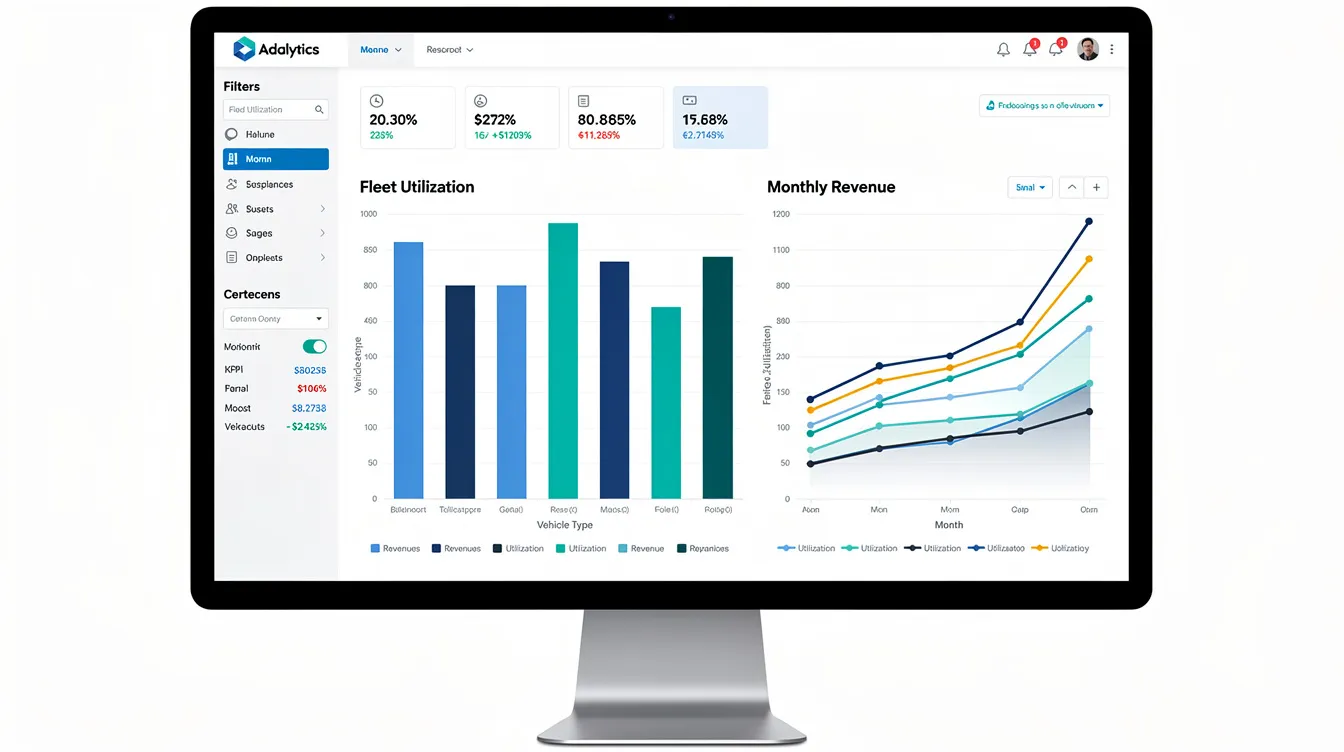
Reporting, Analytics, and Multi-Location Control
Reporting tools turn raw booking data into decisions. An agency owner should monitor these metrics regularly:
-
Occupancy rate: percentage of fleet days rented vs. idle
-
Average daily rate (ADR): revenue divided by rental days
-
Revenue per vehicle: total income each car generates monthly
-
Online vs. offline bookings: ratio of website/marketplace reservations to walk-ins and phone bookings
-
Cancellation ratio: percentage of bookings cancelled before pickup
-
Branch-level revenue: performance comparison across locations
Manage multiple branches with consolidated reporting features. An agency operating in Casablanca, Marrakech, Fes, and Tangier can see all four branches in one dashboard, with branch-level permissions controlling what each team member can access or edit. Managers get the full picture; front-desk agents see only their location's calendar.
Data can typically be exported to CSV or connected to business intelligence tools for deeper analysis. Atlantic Car Rentals, a 22-vehicle fleet in Virginia, saw 312% ROI after switching from spreadsheets to dedicated car rental software, with revenue climbing from $180,000 to $265,000 per year.
Choosing the Right Car Rental System for Your Rental Business
Selection criteria differ by business size. A small agency with five vehicles needs a system that stays organized around core tasks: real-time calendar, contract templates, deposit handling, and an online booking engine. A larger car rental business with multiple branches needs multi-location management, role-based access, API integrations, and dynamic pricing.
Regardless of size, treat online reservations and secure online payments as must-have features, not extras. Support for long-term rentals, airport rentals, and flexible city rentals matters in markets like Morocco where tourism and local demand overlap.
SaaS vs. on-premise: Cloud-based (SaaS) car rental software runs in a browser, updates automatically, and charges a subscription fee. On-premise installations sit on your own servers and require in-house IT. SaaS dominates for small and mid-sized agencies because it eliminates upfront hardware costs, supports access for operators around the world, and gives remote access from any device.
Evaluate pricing models carefully. Some vendors charge per vehicle, others per user, per person, or per transaction. Check for lock-in clauses and data portability. Confirm the system supports localization: languages (French, Arabic, English for Morocco), local currencies (MAD), and applicable tax rules.
A platform like RentalMe relies on a robust car rental system to help agencies digitalize their rental operations, and the same principles apply whether an agency is listing on a marketplace or running its own website.
How RentalMe Uses Car Rental Software to Power Car Rental in Morocco
RentalMe is a Moroccan SaaS marketplace that connects professional car rental agencies with renters, both tourists and residents. The platform acts as a booking layer, enabling online reservations with verified profiles and secure payments.
For renters, the benefits are practical: compare city cars, SUVs, and vans from different agencies in one search; book airport pickups in Casablanca, Marrakech, Agadir, or Fes; and process payments online before arrival. Customers control the entire booking flow from search to confirmation on their phone.
For agencies, RentalMe provides visibility to international travelers, a centralized dashboard to manage the entire fleet, digital agreements, and reduced manual phone and email workload. The platform handles all the functionality needed to discover, compare, and book rental vehicles without replacing an agency's core system; it works alongside or as a SaaS car rental reservation software layer.
The result: agencies that previously relied on walk-ins and phone calls gain an affordable online channel, and renters get a reliable, transparent way to book a car in Morocco.